Rooftop evaporative coolers are common on Phoenix homes, and a failed float, pump, or overflow sends water down through the roof and ceiling. Local crews find the leak, dry the structure, and stop the swamp cooler from flooding the home.

Crews trace the water to the cooler pan, float, pump, or supply line, and have the unit shut down before any drying begins.
Standing water is removed and the wet ceiling or duct chase is opened so trapped moisture around the roof deck can be dried.
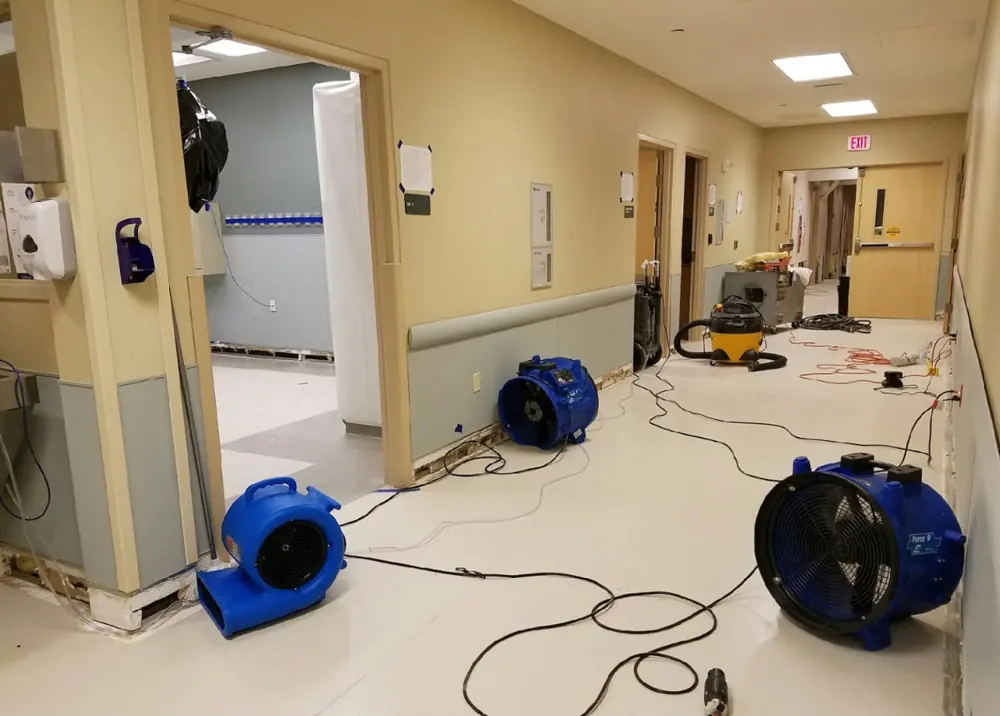
Air movers and dehumidifiers dry the roof deck, framing, and ceiling, with readings tracked daily until the space is fully dry.
Crews repair the ceiling and recommend descaling or servicing the cooler and its float so the same overflow does not repeat.

While help is on the way, these first steps, done only where it is safe, limit the damage and protect the insurance claim.
Shut the supply off at the source, or close the home's main valve if the source is not obvious. Stopping the flow limits the damage more than anything else.
Switch off electricity to the affected area, but only if the breaker can be reached without standing in or touching the water.
Get a crew dispatched right away. The sooner extraction and drying begin, the more flooring, drywall, and belongings can be saved.
Take photos and a short video of the water and the affected rooms before anything is moved, so the insurance claim starts strong.
Swamp cooler leak cleanup in Phoenix generally runs $700 to $3,800, depending on how long the cooler overflowed, whether the ceiling and attic framing are involved, and the repair needed. A quickly caught overflow costs less than a split supply line that ran for hours. Sudden failures are usually covered, and crews document the source and moisture readings for the carrier.
Crews reach Phoenix and the Valley of the Sun fast, from the historic Willo and Coronado districts to Arcadia, Biltmore, and Sunnyslope, and nearby Tempe, Scottsdale, and Glendale. See the full list on the areas served across Phoenix page.
See all areas servedA real crew dispatched any hour, not a callback in the morning.
Trained technicians following recognized IICRC drying standards.
Truck-mounted, portable, and submersible for any size loss.
The loss is documented and billed to the carrier directly.
The rooftop unit holds a reservoir of water, and when the float sticks, the pan cracks, the drain clogs, or the supply line splits, the water goes down through the roof deck into the ceiling below. Hard-water scale is usually behind the failure, jamming the float or corroding the pan.
Yes. Evaporative coolers are a longtime Valley fixture, and many older and post-war homes still run one mounted on the roof. They cool efficiently in the dry desert air, but the rooftop location means any leak drips straight down into the ceiling and attic, which is a common source of interior water damage here.
Have the unit serviced and descaled before cooling season, check that the float shuts off and the drain is clear, and inspect the rooftop supply line for sun damage. Crews can point out where the water entered and recommend the maintenance that keeps the cooler from overflowing again.
A sudden failure such as a split line or a stuck float that overflows is usually covered for the resulting water damage, while long-neglected scale buildup may be treated as maintenance. Crews document the source and moisture readings so the adjuster can assess whether the loss was sudden.
Phoenix crews are on call 24 hours a day, local and fast, and can be on the way within the hour.
Call (623) 254-4056