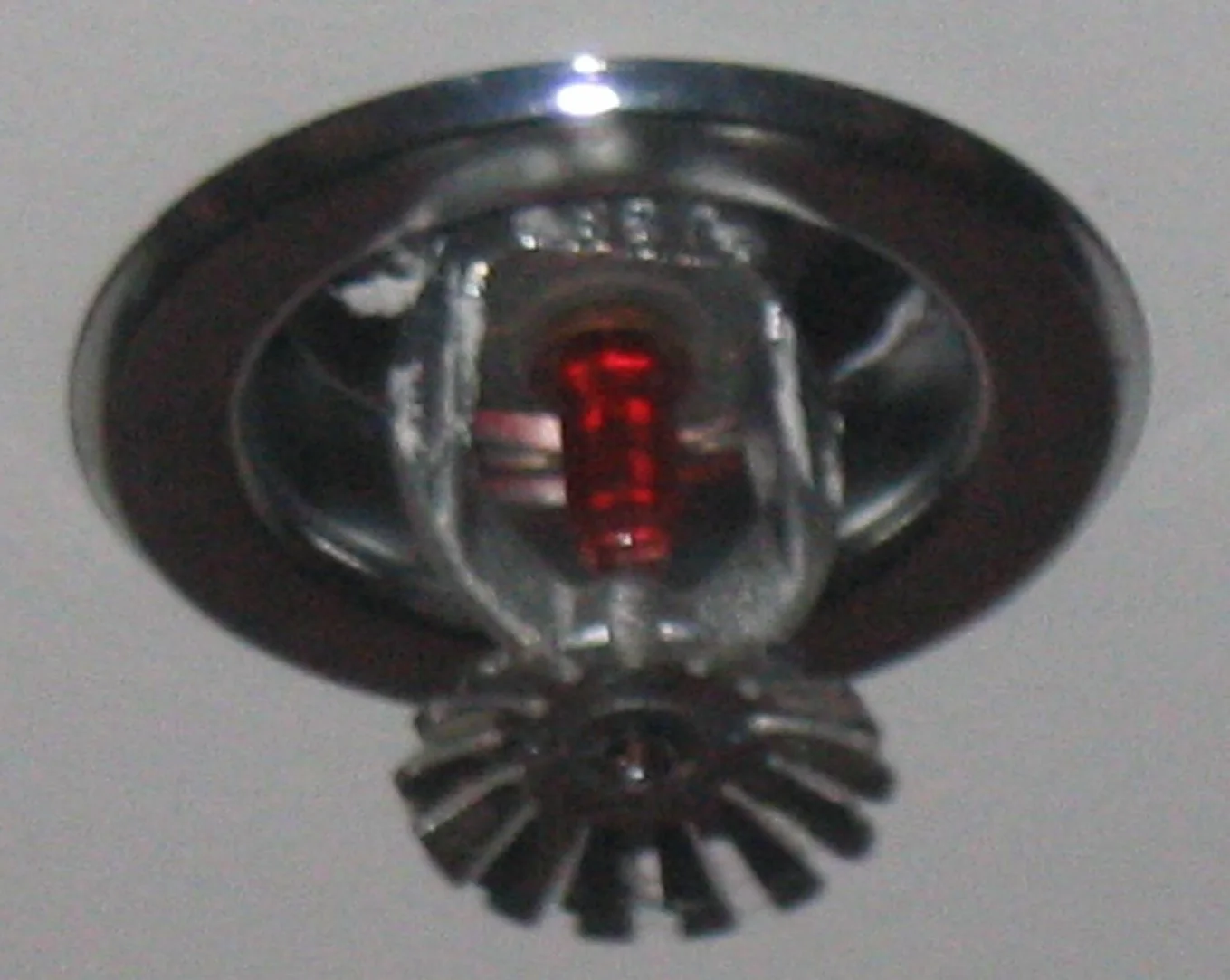
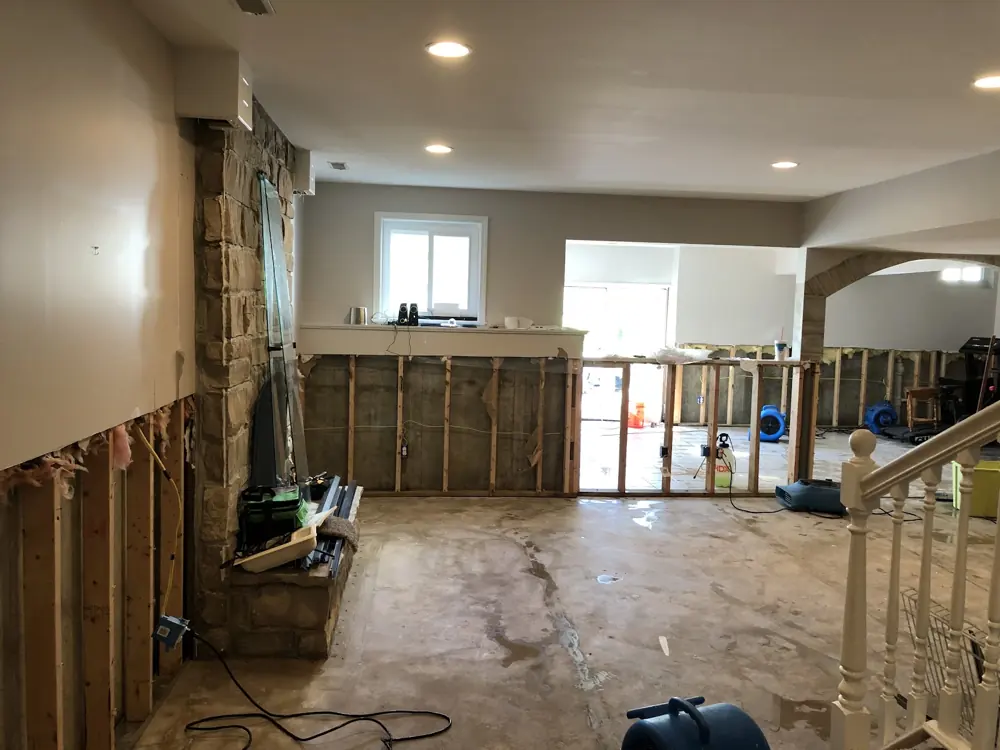
A single fire sprinkler head releases dozens of gallons a minute, so an accidental discharge floods a Phoenix property fast. Local crews extract the water, dry the structure to IICRC standards, and limit the loss before it spreads across the slab.

Once the system is shut down, crews extract the standing water from the slab and every room or unit the discharge reached.
Technicians meter walls, flooring, and ceilings below to map how far water traveled through the structure and any lower floors.
Air movers and dehumidifiers dry the slab, drywall, and framing, with moisture readings tracked daily until the property is fully dry.
Wet drywall, ceiling tile, and flooring are replaced, and crews restore the affected areas so the home or business is back in use.

While help is on the way, these first steps, done only where it is safe, limit the damage and protect the insurance claim.
Shut the supply off at the source, or close the home's main valve if the source is not obvious. Stopping the flow limits the damage more than anything else.
Switch off electricity to the affected area, but only if the breaker can be reached without standing in or touching the water.
Get a crew dispatched right away. The sooner extraction and drying begin, the more flooring, drywall, and belongings can be saved.
Take photos and a short video of the water and the affected rooms before anything is moved, so the insurance claim starts strong.
Fire sprinkler discharge cleanup in Phoenix generally runs $2,000 to $12,000, depending on how many rooms or units flooded, how long the head ran, and whether commercial finishes are involved. A single-room home release costs far less than a multi-unit discharge. Sudden accidental discharges are usually covered, and crews document the water spread and moisture readings for the carrier.
Crews reach Phoenix and the Valley of the Sun fast, from the historic Willo and Coronado districts to Arcadia, Biltmore, and Sunnyslope, and nearby Tempe, Scottsdale, and Glendale. See the full list on the areas served across Phoenix page.
See all areas servedA real crew dispatched any hour, not a callback in the morning.
Trained technicians following recognized IICRC drying standards.
Truck-mounted, portable, and submersible for any size loss.
The loss is documented and billed to the carrier directly.
Get people out of the water's path and shut off the system at the main control valve if you can reach it safely, then call the fire-protection contractor and a cleanup crew. Because a head puts out dozens of gallons a minute, fast shutoff and extraction dramatically limit the damage.
Common causes are physical impact that shears the head, an attic or garage space overheating past the head's rated temperature, or corrosion and scale failing an older fitting. Crews document the cause and coordinate with the contractor who inspects and resets the system.
A single head typically flows dozens of gallons per minute, so even a few minutes before shutoff can flood several rooms or units. On a slab the water spreads sideways fast, which is why rapid extraction and structural drying are the priority after the system is stopped.
Accidental discharge is generally covered under homeowner or commercial property policies, since it is sudden and accidental. Crews document the release, the affected areas, and moisture readings so the adjuster has a clear record of the loss and the drying work performed.
Phoenix crews are on call 24 hours a day, local and fast, and can be on the way within the hour.
Call (623) 254-4056