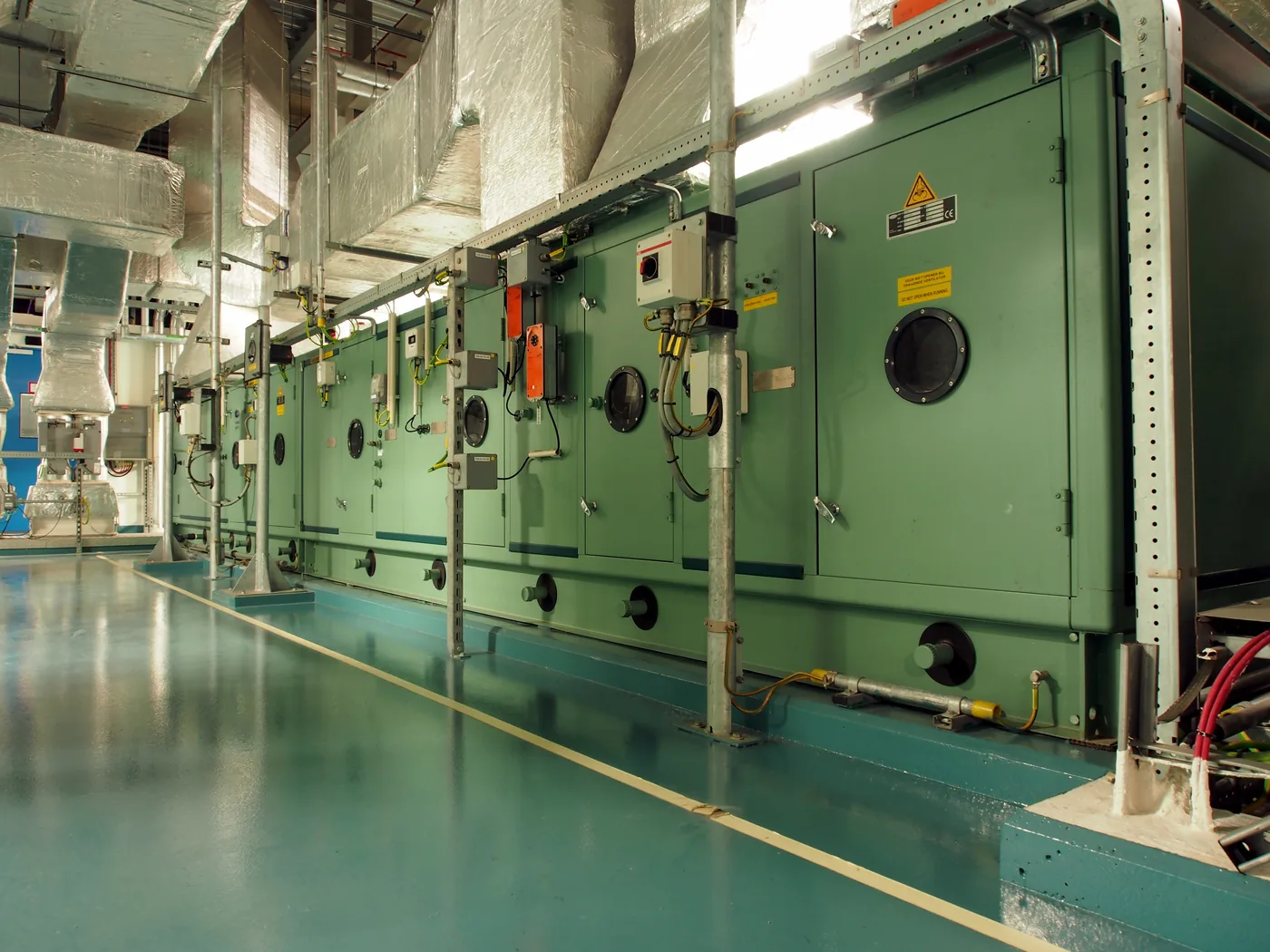
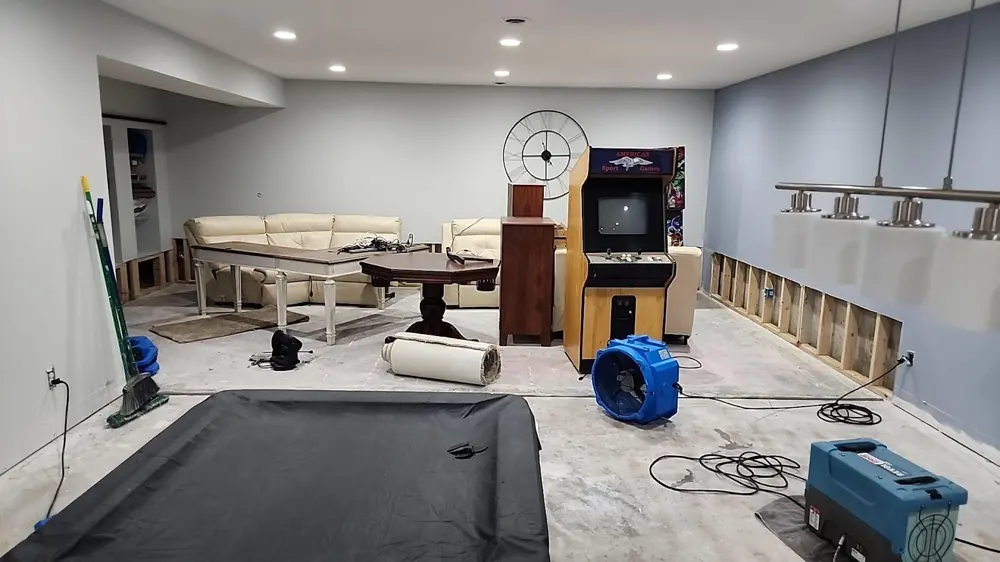
Phoenix runs its air conditioning nearly year-round, and a clogged condensate line or rusted drain pan spills water into ceilings, closets, and attics. Local crews find the overflow, dry the structure, and stop the AC from flooding the home.

Crews trace the water to the condensate line, drain pan, or air handler, then stop the overflow and have the clog cleared before drying starts.
Standing water is removed, and wet ceiling, wall, or closet material is opened so trapped moisture around the unit can be dried.
Air movers and dehumidifiers dry the framing, drywall, and flooring near the unit, with readings tracked daily until fully dry.
Damaged surfaces are repaired, and crews advise on line flushing and a pan safety switch so the same overflow does not repeat.

While help is on the way, these first steps, done only where it is safe, limit the damage and protect the insurance claim.
Shut the supply off at the source, or close the home's main valve if the source is not obvious. Stopping the flow limits the damage more than anything else.
Switch off electricity to the affected area, but only if the breaker can be reached without standing in or touching the water.
Get a crew dispatched right away. The sooner extraction and drying begin, the more flooring, drywall, and belongings can be saved.
Take photos and a short video of the water and the affected rooms before anything is moved, so the insurance claim starts strong.
HVAC condensation cleanup in Phoenix generally runs $600 to $3,500, depending on where the air handler sits, how long the line was clogged, and whether ceilings or flooring must be replaced. An attic unit that stained a ceiling costs more than a closet overflow caught early. Sudden overflows are usually covered, and crews document the source and moisture readings for the carrier.
Crews reach Phoenix and the Valley of the Sun fast, from the historic Willo and Coronado districts to Arcadia, Biltmore, and Sunnyslope, and nearby Tempe, Scottsdale, and Glendale. See the full list on the areas served across Phoenix page.
See all areas servedA real crew dispatched any hour, not a callback in the morning.
Trained technicians following recognized IICRC drying standards.
Truck-mounted, portable, and submersible for any size loss.
The loss is documented and billed to the carrier directly.
The AC removes humidity as condensate and drains it through a narrow line. When that line clogs with algae or hard-water scale, water overflows the drain pan and spills into the ceiling, closet, or attic where the air handler sits. In Phoenix's long cooling season, that overflow can run steadily.
Have the condensate line flushed at the start of cooling season, keep the drain pan clear, and ask an HVAC contractor to add a float safety switch that shuts the system off before a clog overflows. Crews point out where your air handler sits and how it drains.
Because homes run the AC nearly year-round, systems produce a lot of condensate, and hard-water scale plus dust clog the line faster than in milder climates. Many Valley homes also mount the air handler in the attic, so an overflow drips straight onto the ceiling below.
A sudden overflow from a clogged line or failed pan is usually covered, while long-term seepage from a neglected system may be treated as maintenance. Crews document the source, the moisture spread, and readings so the adjuster can assess whether the loss was sudden.
Phoenix crews are on call 24 hours a day, local and fast, and can be on the way within the hour.
Call (623) 254-4056