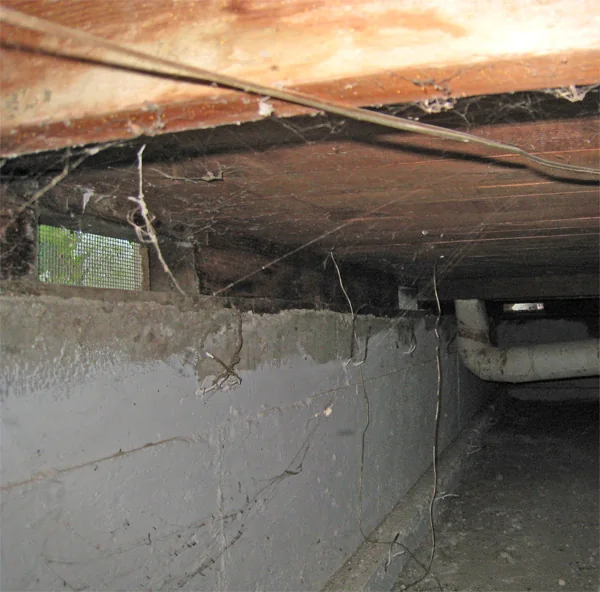
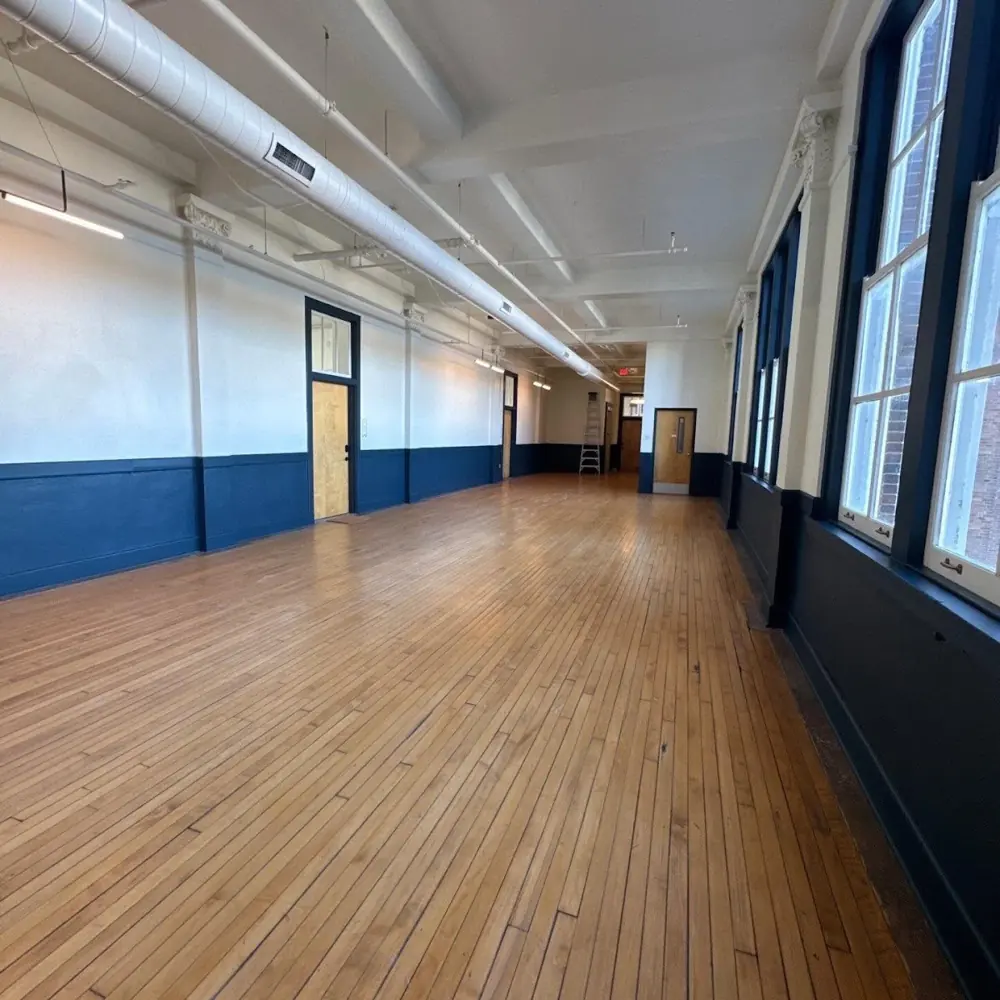
Raised foundations are uncommon in slab-built Phoenix, but the historic homes and additions that do have a crawlspace trap water and stay damp long after a storm. Local crews pump it out and dry the space with IICRC-standard equipment.

Crews pump standing water from the crawlspace and remove wet debris and any collapsed vapor barrier so the ground and framing are exposed.
Air movers and dehumidifiers dry the joists, subfloor, and pier posts, with moisture readings tracked until the wood returns to a safe level.
Crews apply an antimicrobial where dampness sat, and clear organic debris so mold and wood rot have nothing to feed on under the house.
A new vapor barrier is laid and crews recommend grading or drainage fixes so storm runoff no longer pools beneath the home.

While help is on the way, these first steps, done only where it is safe, limit the damage and protect the insurance claim.
Shut the supply off at the source, or close the home's main valve if the source is not obvious. Stopping the flow limits the damage more than anything else.
Switch off electricity to the affected area, but only if the breaker can be reached without standing in or touching the water.
Get a crew dispatched right away. The sooner extraction and drying begin, the more flooring, drywall, and belongings can be saved.
Take photos and a short video of the water and the affected rooms before anything is moved, so the insurance claim starts strong.
Crawlspace water removal in Phoenix typically runs $1,000 to $5,000, depending on the size of the space, how long water sat, and whether framing must be treated or a vapor barrier replaced. Since these homes are rare, access and conditions vary widely. Sudden intrusion from a burst line or storm is usually covered, and crews document the moisture and source for the claim.
Crews reach Phoenix and the Valley of the Sun fast, from the historic Willo and Coronado districts to Arcadia, Biltmore, and Sunnyslope, and nearby Tempe, Scottsdale, and Glendale. See the full list on the areas served across Phoenix page.
See all areas servedA real crew dispatched any hour, not a callback in the morning.
Trained technicians following recognized IICRC drying standards.
Truck-mounted, portable, and submersible for any size loss.
The loss is documented and billed to the carrier directly.
No. The Valley is dominated by slab-on-grade construction, so crawlspaces are rare. They turn up mainly in historic-district bungalows and in room additions or porches framed over a vented crawl. Those are the spaces this service is built to handle.
A damp crawlspace rots wood joists and subfloor, invites mold, and lets that musty air rise into the living space. On tight desert soil the water does not drain on its own, so it must be pumped out and the framing dried before the damage spreads upward.
Warning signs include a musty smell in the rooms above, sagging or springy floors, higher humidity indoors, and visible moisture when the access hatch is opened. Crews inspect with moisture meters to confirm how wet the framing and subfloor have become.
Sudden intrusion from a burst pipe or a storm event is usually covered, while long-term ground moisture or seepage may be excluded as maintenance. Crews document the source and moisture readings so the adjuster can evaluate the claim fairly.
Phoenix crews are on call 24 hours a day, local and fast, and can be on the way within the hour.
Call (623) 254-4056