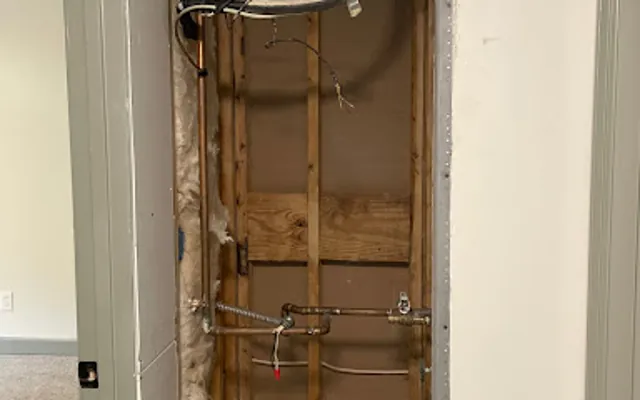
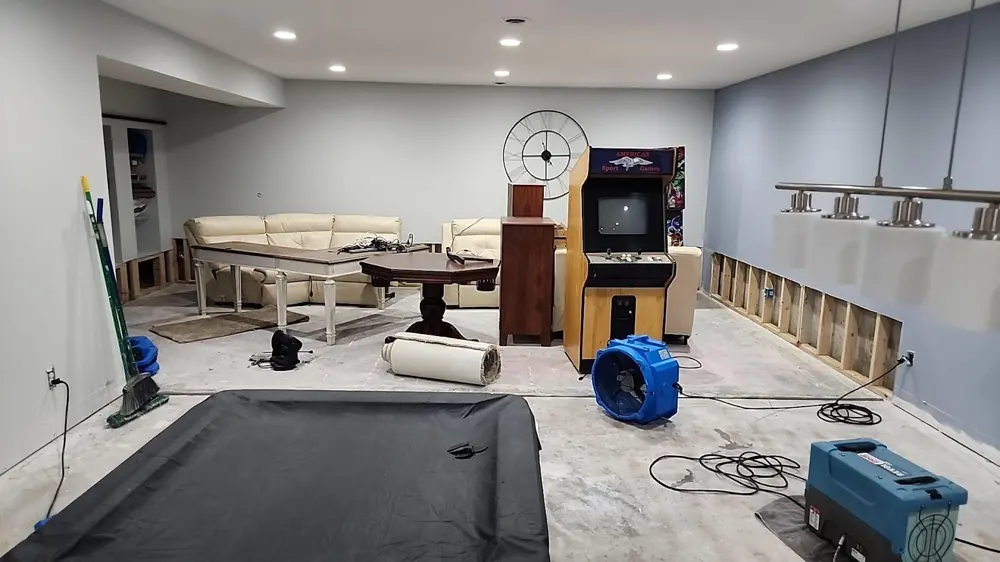
The braided and flex supply lines feeding sinks, toilets, and appliances burst without warning, flooding a Phoenix home while no one is watching. Local crews extract fast, dry the structure to IICRC standards, and flag the failed lines.

Crews help stop the water at the fixture or main, then extract the standing water from the slab and every room it reached.
Technicians meter walls, cabinets, and flooring to find how far the water traveled and where it wicked into the structure.
Air movers and dehumidifiers dry the slab, wall base, and cabinets, with readings tracked daily until fully dry.
A plumber replaces the failed line and any corroded valve, and crews restore the affected rooms so the home is back to normal.

While help is on the way, these first steps, done only where it is safe, limit the damage and protect the insurance claim.
Shut the supply off at the source, or close the home's main valve if the source is not obvious. Stopping the flow limits the damage more than anything else.
Switch off electricity to the affected area, but only if the breaker can be reached without standing in or touching the water.
Get a crew dispatched right away. The sooner extraction and drying begin, the more flooring, drywall, and belongings can be saved.
Take photos and a short video of the water and the affected rooms before anything is moved, so the insurance claim starts strong.
Supply line failure cleanup in Phoenix generally runs $800 to $5,000, depending on how long the line ran, how many rooms the water reached, and whether flooring and drywall must be replaced. A quick catch costs far less than an overnight burst across a slab. Sudden failures are usually covered, and crews document the source and moisture readings for the carrier.
Crews reach Phoenix and the Valley of the Sun fast, from the historic Willo and Coronado districts to Arcadia, Biltmore, and Sunnyslope, and nearby Tempe, Scottsdale, and Glendale. See the full list on the areas served across Phoenix page.
See all areas servedA real crew dispatched any hour, not a callback in the morning.
Trained technicians following recognized IICRC drying standards.
Truck-mounted, portable, and submersible for any size loss.
The loss is documented and billed to the carrier directly.
The rubber or plastic core degrades, a crimped fitting fails, or a plastic supply nut cracks, and because the line is always under pressure, it releases a steady flow when it lets go. Phoenix's hard water speeds it up by scaling and corroding the connectors and shutoff valves over time.
Toilet supply lines with plastic nuts, washing-machine hoses, and under-sink braided connectors are the most common. They are inexpensive to replace, so crews recommend swapping aging lines with quality braided ones and checking the shutoff valves, especially before leaving the home for a trip.
A lot. The line stays pressurized, so it can put out several gallons a minute until the water is shut off. If it fails while the house is empty, that means hundreds of gallons across the slab, which is why crews prioritize fast extraction and full structural drying to limit the damage.
A sudden and accidental burst is typically covered for the resulting water damage, while a slow drip left unaddressed may be treated as maintenance. Crews document the failed line and moisture readings so the adjuster can see the loss was sudden and accidental.
Phoenix crews are on call 24 hours a day, local and fast, and can be on the way within the hour.
Call (623) 254-4056