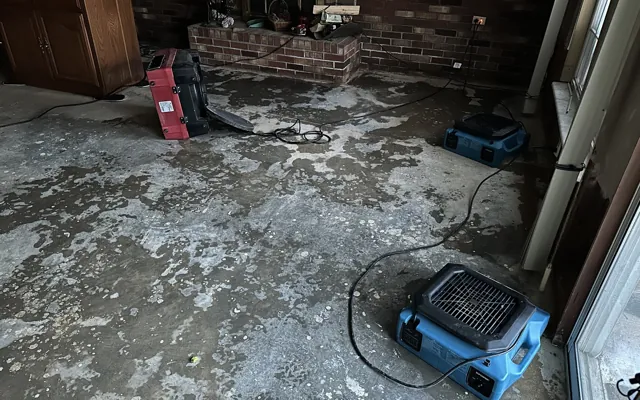
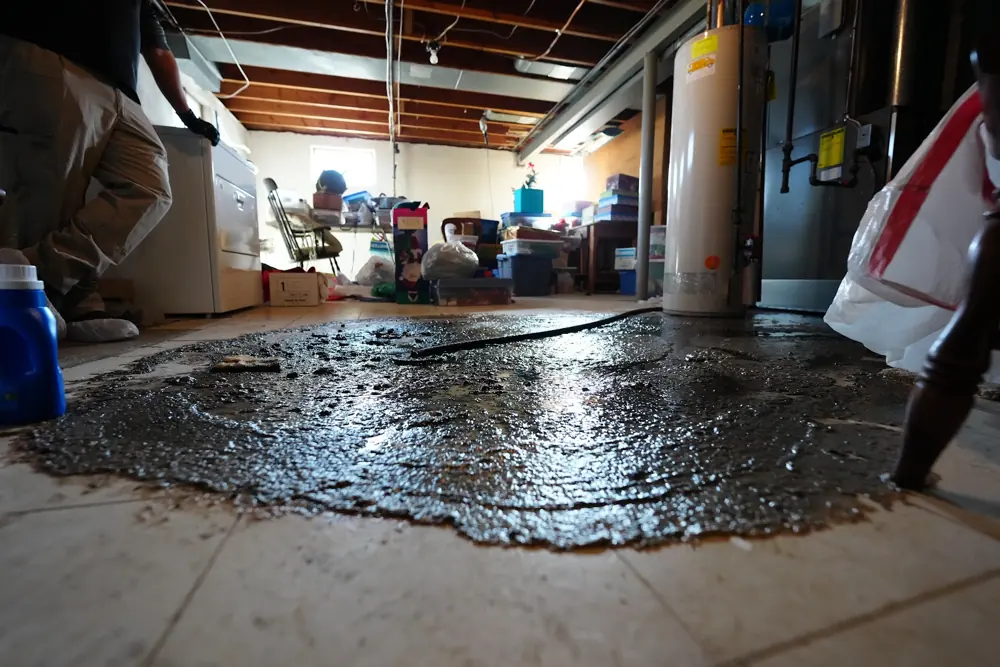
Monsoon microbursts dump intense rain on hard desert ground, and flash flooding pushes water under doors and through roofs across the Valley. Phoenix crews respond fast, extract the storm water, and dry the structure to IICRC standards.

Crews extract standing storm water from the slab and every affected room, prioritizing the fastest removal to limit how far it wicks.
Soaked carpet, pad, and drywall base are removed, and belongings are sorted so salvageable items are separated and set to dry.
Air movers and dehumidifiers dry the slab, walls, and framing, with moisture readings tracked daily until every reading is safe.
Crews restore the affected rooms and recommend threshold seals and grading changes to steer the next storm's runoff away from the home.

While help is on the way, these first steps, done only where it is safe, limit the damage and protect the insurance claim.
Shut the supply off at the source, or close the home's main valve if the source is not obvious. Stopping the flow limits the damage more than anything else.
Switch off electricity to the affected area, but only if the breaker can be reached without standing in or touching the water.
Get a crew dispatched right away. The sooner extraction and drying begin, the more flooring, drywall, and belongings can be saved.
Take photos and a short video of the water and the affected rooms before anything is moved, so the insurance claim starts strong.
Storm flood cleanup in Phoenix generally runs $1,500 to $8,000, depending on how many rooms flooded, how deep the water was, and whether flooring and drywall must be replaced. Runoff that carried mud or contaminants adds cleaning cost. Coverage depends on whether it is surface flooding or a covered event, and crews document the water line and moisture readings for the carrier.
Crews reach Phoenix and the Valley of the Sun fast, from the historic Willo and Coronado districts to Arcadia, Biltmore, and Sunnyslope, and nearby Tempe, Scottsdale, and Glendale. See the full list on the areas served across Phoenix page.
See all areas servedA real crew dispatched any hour, not a callback in the morning.
Trained technicians following recognized IICRC drying standards.
Truck-mounted, portable, and submersible for any size loss.
The loss is documented and billed to the carrier directly.
Get people to safety, shut off power to flooded areas if you can do so safely, and move belongings up out of the water. Then call for extraction right away. On hard desert ground the runoff spreads fast across the slab, so the sooner crews pump it out, the less it soaks in.
The desert ground is hard-baked and sheds water rather than absorbing it, so an intense microburst dropping an inch of rain in minutes has nowhere to drain. Streets and washes channel the runoff toward low-lying homes, pushing water under doors and thresholds before the storm even passes.
It can be. Runoff picks up mud, road oil, and debris on its way, and if it mixes with a backed-up drain it becomes contaminated. Crews assess the water category, clean and treat surfaces where runoff carried contaminants, and remove porous materials that cannot be safely disinfected.
It depends on the source. A roof leak or wind-driven rain intrusion is often covered under a standard policy, while surface flooding and runoff usually require separate flood coverage. Crews document the water source, the line it reached, and moisture readings so the adjuster can determine coverage.
Phoenix crews are on call 24 hours a day, local and fast, and can be on the way within the hour.
Call (623) 254-4056