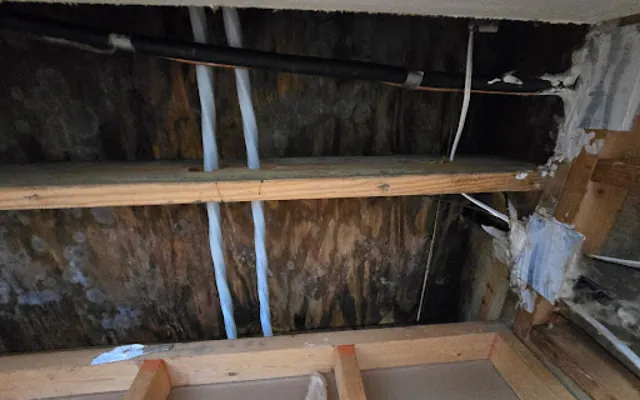
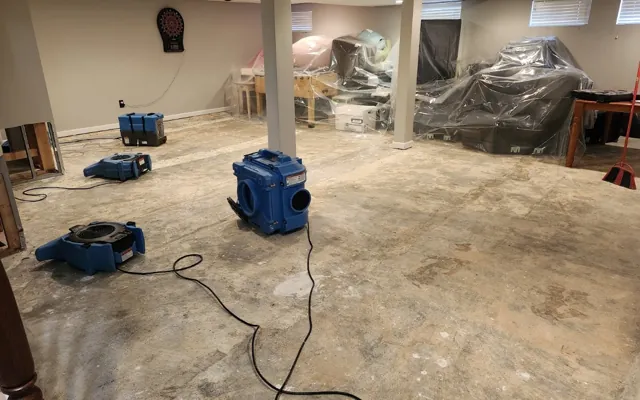
When a monsoon leak hits a Laveen, AZ home, local crews respond fast to stop the damage. They follow IICRC-standard methods to trace the water, dry the structure, and help manage the roof repair, protecting homes from secondary issues like mold.

Crews start by finding where water entered the roof from the ceiling stain. In Laveen homes, they use moisture mapping to follow the path through the attic, pinpointing the exact entry point for the roofer.
Any active drip is contained, and standing water is extracted. In affected attics, wet insulation is carefully bagged and removed to expose the wood framing, preventing further saturation of the home's structure.
High powered air movers and dehumidifiers dry the sheathing, rafters, and ceiling. Technicians take daily moisture readings in the Laveen home until all materials meet the dry standard for repairs to begin.

Roof leak cleanup in Laveen generally runs $1,000 to $6,000, depending on how much attic insulation and ceiling area are wet, whether framing is involved, and the roof repair needed. A single storm stain costs less than widespread attic saturation. Sudden storm-driven leaks are usually covered, and crews document the source and moisture readings for the carrier.
In Laveen, the blend of older rural homes and newer subdivisions creates varied risks for roof leaks. A low, flat desert landscape and flood irrigation channels can mean water finds its way in during the summer monsoon season, leaving wet attics and ceiling stains in its wake. Roof leaks in Laveen are often driven by monsoon storms. The area's older roofs and flat terrain, combined with the sudden intensity of desert downpours, can overwhelm drainage and lead to water intrusion through worn shingles or flashing. From Laveen, crews also cover nearby Maryvale, Tempe, Guadalupe, North Mountain, Glendale, Sunnyslope. See every neighborhood and town on the full service area page.
See all areas servedA real crew dispatched any hour, not a callback in the morning.
Trained technicians following recognized IICRC drying standards.
Truck-mounted, portable, and submersible for any size loss.
The loss is documented and billed to the carrier directly.
Sudden, accidental damage from a storm driven leak is typically covered. Local crews document the source of the water and all moisture readings thoroughly to support the homeowner's insurance claim, which is standard procedure for these incidents in the area.
Drying time depends on the extent of saturation, especially in the attic. For a typical leak affecting insulation and framing, the process often takes 3 to 5 days. Technicians use meters to verify the structure is completely dry before any repairs are made.
Crews are on call 24 hours a day and can be on the way to Laveen within the hour.
Call (623) 254-4056