
Trusted by 155+ Homeowners
Subfloor Water Damage Repair in Fountain Hills, AZ
- Over 155 5-Star Reviews
- Free Estimates and Quotes
- 100% Satisfaction Guaranteed
- Child, Family & Pet Safe Steps
- 24-Hour Emergency Service
- Fully Licensed & Insured

Protecting Your Home from Hidden Damage: Subfloor Water Damage Repair in Fountain Hills, AZ
Did you know that up to 30% of water damage claims are initially underestimated, often because the damage beneath the surface isn’t immediately visible? This is especially true for subfloor water damage, which can fester for weeks or even months before you notice it. If you’re in Fountain Hills, AZ, and suspect moisture might be lurking below your finished floors, it’s crucial to address it quickly. Early detection saves on repair costs and prevents structural integrity issues down the line.
We’ve helped over 165 local homeowners deal with tricky water damage situations, and we’ve earned more than 165 five-star reviews for our honest work. When it comes to that hidden damage under your floors, you need a team that understands the specific challenges of subfloor water damage repair. We focus on getting the job done right, the first time, so you can get back to enjoying your home without worry. We’re committed to providing clear communication and effective solutions for your property.
- We specialize in drying and restoring the subfloor itself, preventing mold growth and rot before it can spread into your walls and foundation.
- Our team uses advanced moisture meters and thermal imaging to pinpoint the exact extent of the water intrusion, ensuring no area is missed.
- We work directly with your insurance company, helping to document the damage thoroughly and navigate the claims process smoothly.
How Subfloor Water Damage Repair Actually Works
A proper subfloor water damage repair process is more than just mopping up a spill. It involves meticulous steps to ensure the underlying structure is completely dried and protected. Cutting corners here often leads to recurring mold, musty smells, and expensive structural repairs later. Our crews follow a proven methodology to address the root cause of the moisture and restore your home’s integrity. We document every stage for your records and for insurance purposes, providing transparency throughout the project.
Inspection and Assessment
First, we’ll thoroughly inspect the affected area using specialized equipment. This includes moisture meters, infrared cameras, and borescopes to see beneath your flooring and into the subfloor structure. We determine the source of the water and the full extent of the damage. This initial assessment usually takes a few hours, depending on the complexity. You’ll receive a detailed report outlining our findings and proposed plan. Accurate assessment is the foundation of a successful repair.
Water Extraction
Once the source is identified and stopped, our crews use powerful pumps and extraction units to remove as much standing water as possible from the subfloor. This is a critical step to prevent further saturation and minimize damage. We’ll work until the visible water is gone, which can take anywhere from a few hours to a full day, depending on the volume. Efficient water removal is key to starting the drying process.
Structural Drying
This is where specialized equipment comes in. We’ll set up industrial-grade air movers and dehumidifiers directly over or around the affected subfloor areas. These machines work continuously to pull moisture out of the wood and the air. This phase can take several days, sometimes up to a week, depending on how saturated the subfloor is and ambient humidity levels. We monitor moisture levels daily to ensure effective drying. Thorough drying prevents future problems.
Mold Prevention and Remediation
If mold has already begun to form, or if conditions are conducive to its growth, we’ll implement targeted mold prevention treatments. In cases of significant mold, our certified technicians will perform safe and effective mold remediation. This ensures your home’s air quality is healthy and the mold doesn’t return. This step is vital for your family’s well-being. Preventing mold growth is a top priority.
Subfloor Repair and Restoration
Once the subfloor is completely dry and any mold is addressed, we’ll repair any damaged sections. This might involve reinforcing weakened areas or replacing severely compromised pieces of the subfloor. We ensure the subfloor is structurally sound before your flooring is reinstalled. We aim for a stable foundation for your finished floors. Our goal is to leave your home better than we found it.
Don’t let hidden water damage compromise your home’s structure. Contact us today for an immediate inspection and a clear plan to fix your subfloor. We’re ready to help you protect your investment.
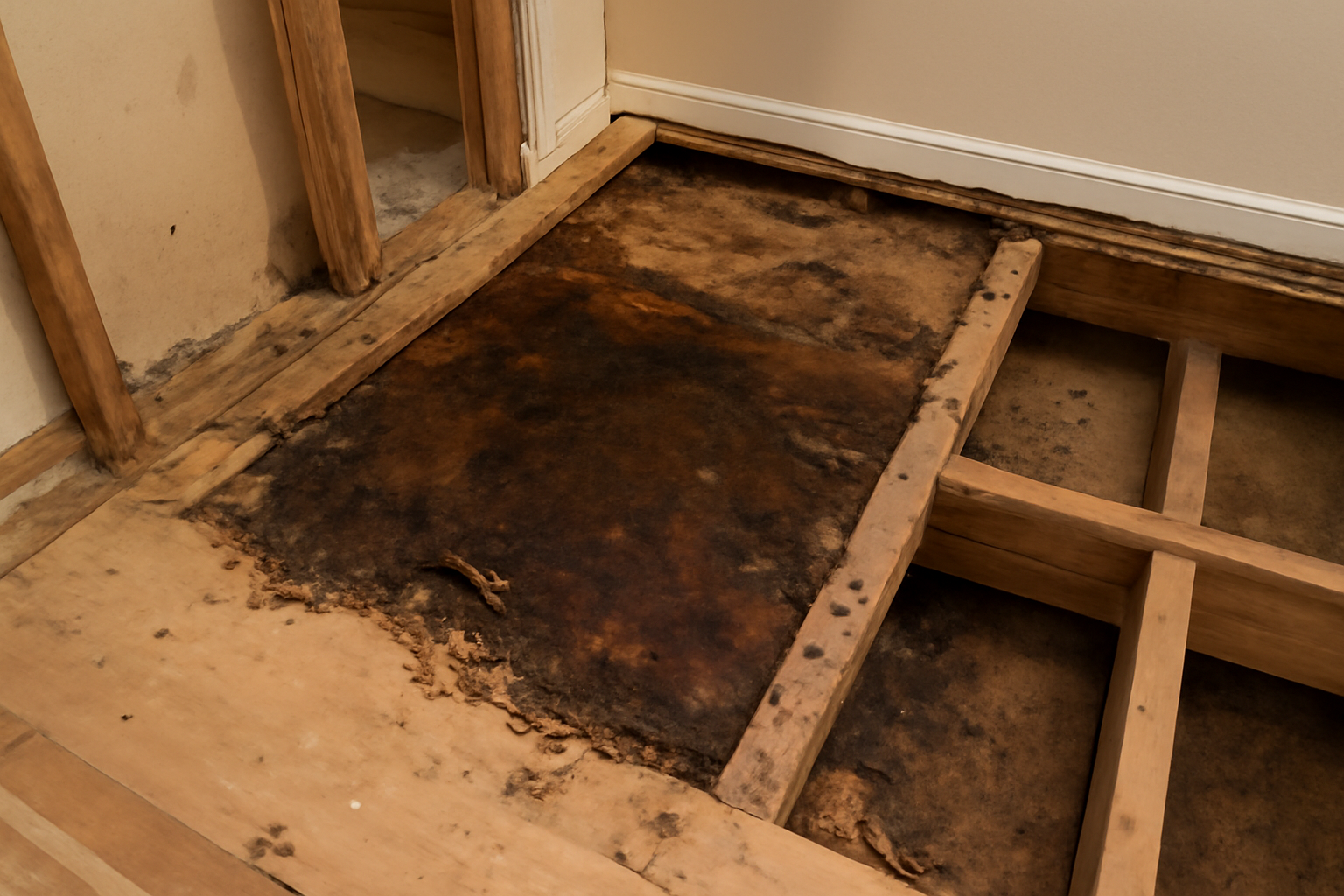
Warning Signs You Need Subfloor Water Damage Repair
Catching subfloor water damage early can save you a significant amount of money and prevent much larger headaches. Ignoring the subtle signs can lead to extensive structural damage, mold infestations, and unhealthy living conditions. Pay attention to what your home is telling you. Early intervention is crucial for minimizing costly repairs.
Musty Odors That Won’t Go Away
A persistent damp, earthy smell, especially when you’re close to the floor or in a specific room, is often the first sign of moisture trapped beneath your flooring. This smell indicates potential mold or mildew growth. Don’t ignore persistent odors; they’re a clear warning.
Soft or Spongy Flooring
When you walk on certain areas of your floor and it feels soft, squishy, or gives way slightly, the subfloor beneath is likely waterlogged and losing its structural integrity. This is a direct indicator of significant moisture damage. Spongy floors need immediate attention.
Warped or Buckled Flooring
Visible warping, cupping, or buckling of your hardwood, laminate, or vinyl flooring suggests that moisture has been absorbed and caused the material to expand unevenly. This often means the subfloor is also compromised. Warped flooring signals underlying issues.
Stains or Discoloration on Flooring
Water stains, dark spots, or discoloration appearing on your finished flooring, especially near baseboards or in the center of rooms, can indicate water seeping up from below. These marks are often permanent and point to prolonged moisture exposure. Discolored floors are a visual cue.
Increased Humidity Levels Indoors
If the general humidity level in your home feels unusually high, or if condensation is forming on windows more frequently, it could be a sign of a hidden water source, like a leaking pipe under the subfloor. High indoor humidity can indicate hidden problems.
Sound Changes When Walking
Hearing creaking, popping, or hollow sounds when you walk on your floors, especially in areas where it wasn’t common before, can mean the subfloor is deteriorating due to water saturation. The wood is losing its ability to support your weight properly. Unusual floor sounds require investigation.
Subfloor Water Damage Repair vs. DIY: When To Call a Professional
| Situation | DIY? | Call a Pro? | Why |
|---|---|---|---|
| Small spill on tile with no visible damage | Yes | No | Quick cleanup is usually sufficient. |
| Suspected leak from a pipe under the subfloor | No | Yes | Requires professional leak detection and plumbing repair. |
| Visible mold growth on the subfloor | No | Yes | Mold remediation requires specialized safety and equipment. |
| Flooring feels soft or spongy underfoot | No | Yes | Indicates structural damage needing expert drying and repair. |
| Musty odors persist after drying | No | Yes | Likely means hidden moisture or mold is still present. |
| Water damage affecting multiple rooms or large areas | No | Yes | Extensive drying and repair are beyond typical DIY capabilities. |
While minor spills might be manageable with quick action, any situation involving standing water, suspected leaks, mold, or compromised flooring should be handled by professionals. Professional expertise ensures the damage is fully addressed, preventing long-term issues and protecting your home’s value. We have the tools and training for complex subfloor restoration.
Subfloor Water Damage Repair Cost In Fountain Hills, AZ
The cost for subfloor water damage repair in Fountain Hills, AZ, can vary significantly. Factors include the size of the affected area, the depth of saturation, the type of flooring removed, and the extent of subfloor damage. These are estimates, and a precise quote requires an on-site inspection. We strive to provide cost-effective repair solutions.
| Service | Typical Price Range | What Affects Cost |
|---|---|---|
| Initial Inspection and Moisture Assessment | $300 – $750 | Complexity of the area and equipment needed. |
| Water Extraction (per sq ft) | $0.50 – $2.00 | Volume of water and accessibility. |
| Subfloor Drying (per day with equipment) | $300 – $600 | Duration needed based on saturation levels. |
| Mold Prevention/Treatment | $400 – $1,200 | Size of area and type of treatment. |
| Subfloor Repair/Replacement (per sq ft) | $5 – $20 | Severity of damage and materials used. |
| Flooring Removal and Reinstallation | Varies widely | Type of flooring and complexity of removal. |
Exact pricing depends on a thorough on-site assessment by our team. We offer free, no-obligation estimates for subfloor water damage repairs.
Service Areas Near Fountain Hills, AZ
Phoenix, Scottsdale, Tempe, Mesa, Chandler, Gilbert, Glendale, Peoria, Surprise, Avondale, Goodyear, Buckeye, Fountain Hills, Apache Junction, Gold Canyon, San Tan Valley, Queen Creek, Casa Grande, Maricopa, Sun City.
Common Questions About Subfloor Water Damage Repair
How long does subfloor water damage repair take?
The timeline for subfloor water damage repair varies greatly depending on the severity of the water intrusion. Initial water extraction might take a few hours. However, the drying process using specialized equipment can take anywhere from 3 to 7 days, sometimes longer if the subfloor is deeply saturated. Structural repairs add more time. We provide a projected timeline after our initial assessment.
Will my insurance cover subfloor water damage?
Typically, if the water damage is sudden and accidental, like a burst pipe, your homeowner’s insurance policy will cover the costs associated with subfloor water damage repair. Damage from gradual leaks or poor maintenance might not be covered. We work with insurance companies to help document the damage and file claims. We can assist you in understanding your policy coverage.
What are the health risks of ignoring subfloor water damage?
Ignoring subfloor water damage can lead to significant health risks, primarily due to mold and mildew growth. These fungi release spores into the air that can cause respiratory problems, allergic reactions, and exacerbate asthma symptoms. Prolonged exposure can lead to chronic health issues. Protecting your family’s health is paramount, which is why prompt remediation is vital. We ensure a safe and healthy environment.
Can I just dry the subfloor myself?
For minor, fresh spills on accessible subflooring, some DIY drying might be possible with fans and dehumidifiers. However, for significant water intrusion, hidden leaks, or if the subfloor is deeply saturated, professional intervention is necessary. Our professional equipment reaches deeper and dries more effectively than standard home appliances. We can also identify if the subfloor structure itself is compromised.
What happens if the subfloor isn’t dried properly?
If the subfloor isn’t dried completely and thoroughly, you’ll likely face ongoing problems. These include persistent musty odors, the inevitable growth of mold and mildew, potential structural rot that weakens the floor joists and foundation, and damage to your finished flooring. Incomplete drying leads to recurring issues and much higher repair bills down the road. We guarantee a thorough drying process.
Check Our Other Relevant Services
Serving Fountain Hills, AZ And Nearby Areas


